

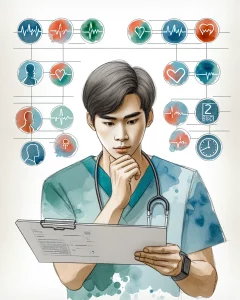
Topic 4.3: Interpretation of Assessment Findings
In this topic, we will delve into the important skill of interpreting health assessment findings. This skill is essential for nurses as it helps them recognize normal and abnormal findings, which in turn informs their decision-making process.
4.3.1 Understanding Normal Findings
First and foremost, it is crucial to have a solid understanding of what constitutes normal findings in health assessments. Normal findings refer to the signs and symptoms that are within the expected range for a healthy individual. These findings may vary depending on the age, gender, and cultural background of the patient.
When interpreting health assessment findings, nurses should consider various factors such as the patient’s age, lifestyle, and medical history. By doing so, they can establish a baseline for what is considered normal for that particular patient.
4.3.2 Identifying Abnormal Findings
Abnormal findings, on the other hand, deviate from the expected range and may indicate the presence of an underlying health condition. Nurses need to be able to recognize these abnormal findings and understand their significance.
To identify abnormal findings, nurses should compare the patient’s current assessment results to the expected or normal findings. They should be familiar with the common signs and symptoms of various health conditions to facilitate accurate interpretation.
4.3.3 Critical Thinking in Assessment Interpretation
Interpretation of health assessment findings requires nurses to engage in critical thinking. This involves analyzing the data collected during the assessment, considering the patient’s medical history, and drawing conclusions based on evidence.
Critical thinking skills enable nurses to make accurate judgments and develop appropriate care plans for their patients. It involves reasoning, problem-solving, and decision-making based on the assessment findings.
4.3.4 Communication and Collaboration
Interpreting assessment findings is not an isolated task. Nurses often collaborate with other healthcare professionals to ensure accurate interpretation and decision-making. Effective communication and collaboration with the healthcare team are essential for providing comprehensive care.
Nurses should be able to effectively communicate their assessment findings to other healthcare professionals, such as doctors or specialists. This collaboration helps in obtaining a holistic view of the patient’s health and facilitates evidence-based decision-making.
Conclusion
Interpreting assessment findings is a crucial skill for nurses as it allows them to recognize normal and abnormal findings, which guides their subsequent actions. By developing critical thinking skills in assessment interpretation and fostering effective communication and collaboration, nurses can provide holistic care to their patients.