

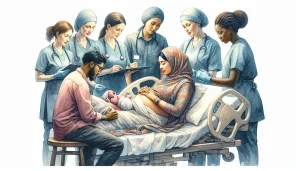
Topic 7.2: Labor and Delivery
In this topic, we will explore the various aspects of labor and delivery, including the stages of labor, nursing care during childbirth, pain management techniques, and immediate care of the newborn and mother after delivery.
1. Stages of Labor
Labor is divided into three stages: the first stage, the second stage, and the third stage. Understanding these stages is crucial for providing appropriate care and support to the mother during the birthing process.
- The first stage of labor is further divided into three phases: early labor, active labor, and transition. During this stage, the cervix dilates and effaces, contractions become stronger and more frequent, and the baby descends into the birth canal.
- The second stage of labor begins when the cervix is fully dilated and ends with the birth of the baby. At this stage, the mother experiences strong contractions and an urge to push.
- The third stage of labor involves the delivery of the placenta. This stage is relatively short and usually accompanied by mild contractions.
2. Nursing Care During Childbirth
During childbirth, nurses play a crucial role in providing physical and emotional support to the mother. Some important aspects of nursing care during childbirth include:
- Monitoring vital signs of the mother and the baby.
- Assisting the mother with breathing and relaxation techniques.
- Providing guidance and encouragement during pushing.
- Ensuring a clean and sterile environment for delivery.
- Assisting with pain management techniques, such as administering medications or providing comfort measures.
- Communicating with the healthcare team to coordinate care effectively.
3. Pain Management Techniques
Childbirth can be a painful experience for the mother. Nurses can help alleviate pain and discomfort by employing various pain management techniques:
- Non-pharmacological techniques include breathing exercises, relaxation techniques, massage, and positioning.
- Pharmacological pain relief options may include analgesics or epidural anesthesia, which can be administered by a qualified healthcare provider.
It is important for nurses to assess the mother’s pain and determine the most appropriate pain management techniques based on her preferences and medical condition.
4. Immediate Care of the Newborn and Mother After Delivery
After delivery, the immediate care of the newborn and mother is essential to ensure their wellbeing. Some key aspects of immediate postpartum care include:
- Assessing the newborn’s vital signs and conducting a thorough physical examination.
- Promoting mother-infant bonding and initiating breastfeeding.
- Administering medications, such as vitamin K or eye ointment, as per standard protocols.
- Assisting the mother with postpartum recovery, including pain management, perineal care, and education on self-care.
Nurses should closely monitor both the newborn and the mother for any signs of complications or distress and provide appropriate interventions as necessary.
By the end of this topic, you will have gained a comprehensive understanding of the stages of labor, nursing care during childbirth, pain management techniques, and the immediate care of the newborn and mother after delivery. This knowledge will equip you with the necessary skills to support and provide quality care to women during this critical phase of their lives.