

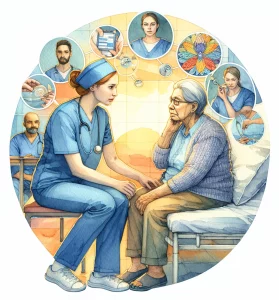
In the field of nursing, effective communication is essential for building trust and rapport with patients. Therapeutic communication techniques are key strategies used by nurses to establish a therapeutic relationship, promote patient-centered care, and enhance the overall well-being of patients. This topic will explore some of the commonly used therapeutic communication techniques and their importance in nursing practice.
1. Open-ended questions
One important therapeutic communication technique is the use of open-ended questions. Open-ended questions encourage patients to express their thoughts and feelings, allowing for a more comprehensive understanding of their needs and concerns. These questions typically begin with phrases such as “How,” “What,” or “Tell me about.” By using open-ended questions, nurses can promote active patient participation and encourage them to share relevant information.
Example: “Tell me how you have been feeling since your last visit?”
2. Reflection
Reflection is a technique used to demonstrate empathy and understanding towards patients. It involves paraphrasing or restating what the patient has said, allowing them to feel heard and validated. Reflection also helps nurses ensure that they have correctly understood the patient’s message and can clarify any misunderstandings.
Example: Patient: “I’m feeling really anxious about my upcoming surgery.” Nurse: “It sounds like you’re feeling quite anxious about the surgery.”
3. Validation
Validation is another important therapeutic communication technique that involves acknowledging and recognizing the patient’s feelings, thoughts, and experiences as valid and meaningful. This technique helps patients feel understood and accepted, creating a safe and supportive environment for communication. Validation can be verbal or non-verbal, and it reinforces the nurse’s empathy and respect towards the patient.
Example: “I can understand why you might feel frustrated with your current situation.”
4. Active listening
Active listening is a crucial component of effective therapeutic communication. It involves paying full attention to the patient, both verbally and non-verbally. Active listening requires nurses to focus on the patient’s words, tone of voice, body language, and emotions. By demonstrating active listening, nurses can show genuine interest in the patient’s concerns and provide appropriate support.
Example: Maintaining eye contact, nodding, and using verbal cues like “I see,” or “Go on” to encourage the patient to continue sharing.
5. Non-verbal communication
Non-verbal communication plays a significant role in therapeutic communication. It includes body language, facial expressions, gestures, and touch. Nurses should be aware of their own non-verbal cues and be sensitive to the patient’s non-verbal cues as well. Non-verbal communication can convey empathy, understanding, and respect, which are vital for establishing a therapeutic relationship.
Example: Sitting at eye level with the patient, maintaining an open posture, and using appropriate facial expressions.
By utilizing these therapeutic communication techniques, nurses can create a supportive environment that fosters trust, empathy, and effective patient-centered care. These techniques promote active engagement, enhance patient satisfaction, and contribute to positive healthcare outcomes.