
Challenges in Healthcare Digitalization

Pekka Ollikainen 6.3.2024
Lesson Progress
0% Complete
Introduction
Before delving into the benefits and advancements brought forth by digitalization in the healthcare sector at developing countries, it is critical to understand the challenges that the sector faced prior to the adoption of digital technologies.
Challenges Faced by Healthcare Sector
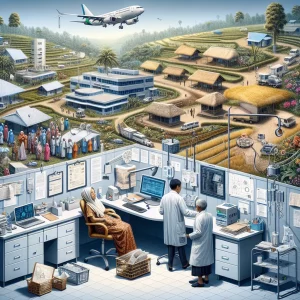
- Limited Access to Healthcare Services: In many countries the geographical landscape poses a significant challenge in providing equitable healthcare services to all citizens. Rural areas often lack adequate healthcare facilities and personnel, leading to disparities in access to quality care.
- Fragmented Healthcare System: The healthcare system was historically fragmented, with various stakeholders operating independently. This fragmentation resulted in inefficiencies, duplication of efforts, and difficulties in coordinating patient care across different providers.
- Paper-Based Processes: Traditional paper-based systems for managing patient records, prescriptions, and administrative tasks areprevalent at many healthcare facilities. These manual processes were time-consuming, error-prone, and hindered the seamless exchange of information between healthcare providers.
- Lack of Standardization: Prior to digitalization, there was a lack of standardization in healthcare practices, protocols, and documentation. This absence of uniformity made it challenging to ensure consistency in the quality of care delivered across different healthcare settings.
- Data Security Concerns: The healthcare sector in Indonesia faced significant data security challenges due to the reliance on paper records and manual documentation. Patient confidentiality and data privacy were at risk, with the potential for loss, theft, or unauthorized access to sensitive health information.
- Limited Interoperability: The lack of interoperability between different healthcare systems, such as hospitals, clinics, and laboratories, hindered the seamless sharing of patient information and coordination of care. This siloed approach fragmented patient data and impeded holistic healthcare delivery.
- Resistance to Change: Introducing digital technologies and transitioning to electronic health records (EHRs) required a significant cultural shift within the healthcare sector. Resistance to change, apprehension towards new technologies, and the need for extensive training were common barriers that impeded the adoption of digitalization initiatives.
Conclusion
Addressing these pre-existing challenges was imperative for the successful digital transformation of the healthcare sector. By understanding and overcoming these obstacles, stakeholders could pave the way for a more efficient, coordinated, and patient-centric healthcare system enabled by digital technologies.