

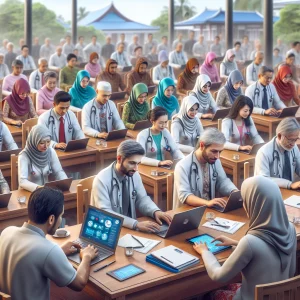
In the rapidly evolving landscape of healthcare in Indonesia, the importance of equipping medical personnel with digital skills cannot be overstated. Training programs have been developed to support healthcare professionals in adapting to and embracing modern healthcare practices that are heavily reliant on digital technologies.
Importance of Digital Skills Development
The integration of digital tools and technologies in healthcare has revolutionized the way medical services are delivered, managed, and optimized. Medical personnel need to acquire digital skills to effectively leverage these technologies for improved patient care, operational efficiency, and decision-making.
Training Programs
1. Digital Health Literacy:
This program focuses on enhancing medical professionals’ understanding of digital health concepts, including electronic health records (EHR), telemedicine, health information systems, and data analytics. Participants learn how to navigate digital platforms and interpret health data to make informed decisions.
2. Electronic Medical Record (EMR) Systems Training:
Medical personnel are trained to use EMR systems for efficient documentation, storage, and retrieval of patient information. They learn how to input data accurately, maintain confidentiality, and use EMR features to streamline clinical workflows.
3. Telemedicine and Remote Patient Monitoring:
This program teaches healthcare providers how to conduct virtual consultations, monitor patients remotely, and use telehealth platforms for diagnosis, treatment, and follow-up care. Medical personnel are trained to ensure the security and privacy of patient data during remote interactions.
4. Health Information Management (HIM) Training:
Medical professionals undergo training in HIM practices to effectively manage healthcare data, ensure data integrity, and comply with regulatory requirements. They learn how to use HIM systems for coding, billing, and reporting purposes, contributing to efficient healthcare operations.
Benefits of Digital Skills Development
- Enhanced Patient Care: Medical personnel equipped with digital skills can deliver personalized and timely care to patients, leading to improved health outcomes and patient satisfaction.
- Operational Efficiency: Digital skills enable healthcare providers to automate processes, reduce paperwork, and optimize resource allocation, resulting in cost savings and increased productivity.
- Data-Driven Decision Making: Proficiency in digital technologies empowers medical professionals to analyze health data, identify trends, and make evidence-based decisions that drive continuous improvement in healthcare delivery.
Conclusion
Digital skills development is essential for medical personnel to thrive in the digitalization of healthcare in Indonesia. By participating in training programs tailored to their needs, healthcare professionals can embrace digital transformation, enhance patient care, and contribute to the advancement of the healthcare industry.
Would you like to explore any other aspect of Digital Skills Development for Medical Personnel in the context of healthcare digitalization?