
-
Lesson 1: Introduction to Nursing3 Topics
-
Lesson 2: Anatomy and Physiology2 Topics
-
Lesson 3: Nursing Ethics and Professionalism3 Topics
-
Lesson 4: Health Assessment4 Topics
-
Lesson 5: Essentials of Nursing Care3 Topics
-
Lesson 6: Pharmacology in Nursing3 Topics
-
Lesson 7: Maternal and Child Health Nursing3 Topics
-
Lesson 8: Mental Health Nursing3 Topics
-
Lesson 9: Nursing Research and Evidence-Based Practice3 Topics
-
Lesson 10: Introduction to Clinical Practice2 Topics




Introduction to Human Anatomy
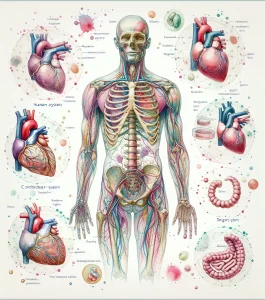
Human anatomy is the study of the structure, organization, and systems of the human body. It provides a foundational understanding of how our bodies are built and how different parts work together to support various bodily functions. In this topic, we will delve into the key systems of the human body and explore their functions and interconnections.
The Skeletal System
The skeletal system forms the framework of the body and is composed of bones, cartilage, ligaments, and tendons. It provides support, protection, and mobility to the body. We will explore the structure and functions of the skeletal system, including the types of bones, bone development, and the role of joints.
The Muscular System
The muscular system is responsible for movement, posture, and heat production. It consists of three types of muscles: skeletal, smooth, and cardiac muscles. In this section, we will study the structure and functions of each type of muscle and understand how they work together to facilitate movement.
The Cardiovascular System
The cardiovascular system comprises the heart, blood vessels, and blood. It transports oxygen, nutrients, hormones, and waste products throughout the body. We will explore the anatomy of the heart, blood vessels, and the components of blood. Additionally, we will discuss the functions of the cardiovascular system, including the circulation of blood and the role of the heart in pumping blood.
The Respiratory System
The respiratory system is responsible for the exchange of gases, specifically oxygen and carbon dioxide. It includes organs such as the nose, trachea, lungs, and diaphragm. In this section, we will study the structure and functions of these organs and understand the process of respiration.
The Digestive System
The digestive system is responsible for the breakdown and absorption of nutrients from the food we consume. It includes organs such as the mouth, esophagus, stomach, small intestine, and large intestine. We will explore the structure and functions of these organs and discuss the process of digestion and absorption.
The Nervous System
The nervous system is the control center of the body and coordinates all bodily functions. It comprises the brain, spinal cord, and nerves. In this section, we will study the structure and functions of the nervous system, including the different types of neurons, the parts of the brain, and the transmission of nerve impulses.
Conclusion
Understanding human anatomy is crucial for nursing students as it forms the foundation for providing effective care to patients. By comprehending the structure and functions of the skeletal, muscular, cardiovascular, respiratory, digestive, and nervous systems, nurses can better assess and address patient needs. In the next lesson, we will further explore the intricate details of human anatomy and its relevance to nursing practice in Zambia.