
-
Lesson 1: Introduction to Nursing3 Topics
-
Lesson 2: Anatomy and Physiology2 Topics
-
Lesson 3: Nursing Ethics and Professionalism3 Topics
-
Lesson 4: Health Assessment4 Topics
-
Lesson 5: Essentials of Nursing Care3 Topics
-
Lesson 6: Pharmacology in Nursing3 Topics
-
Lesson 7: Maternal and Child Health Nursing3 Topics
-
Lesson 8: Mental Health Nursing3 Topics
-
Lesson 9: Nursing Research and Evidence-Based Practice3 Topics
-
Lesson 10: Introduction to Clinical Practice2 Topics




Topic 5.3: Infection Control
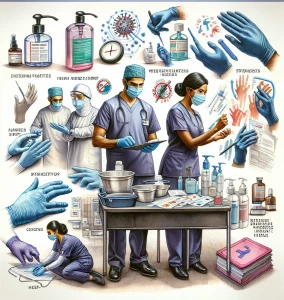
Infection control is a crucial aspect of nursing care that ensures the safety and well-being of both patients and healthcare providers. In this topic, we will explore the principles of infection control, including the importance of hand hygiene, the proper use of personal protective equipment (PPE), and strategies to prevent the spread of healthcare-associated infections.
1. Hand Hygiene
Hand hygiene is the single most effective way to prevent the spread of infections in healthcare settings. Nurses must understand and practice proper hand hygiene protocols to minimize the risk of transmitting harmful microorganisms. The key points to remember about hand hygiene are:
- When to perform hand hygiene: It is essential to perform hand hygiene before and after every patient contact, after touching any potentially contaminated surfaces, and before and after wearing gloves.
- Proper handwashing technique: Proper handwashing involves using soap and water, rubbing hands together for at least 20 seconds, paying attention to all surfaces of the hands and fingers, and rinsing thoroughly.
- Using hand sanitizers: Alcohol-based hand sanitizers can be used when soap and water are not readily available. Ensure that the sanitizer contains at least 60% alcohol and cover all surfaces of the hands until they are dry.
2. Personal Protective Equipment (PPE)
Personal protective equipment (PPE) is worn by healthcare providers to protect themselves and patients from potential transmission of infectious pathogens. Nurses should be knowledgeable about the appropriate use of PPE. Here are some key considerations:
- Types of PPE: PPE includes gloves, gowns, masks, and eye protection. The specific type of PPE required depends on the nature of the care being provided.
- Proper donning and doffing technique: Nurses should learn the correct technique for putting on (donning) and taking off (doffing) PPE to avoid contamination.
- Ensuring PPE availability: It is essential to have an adequate supply of PPE in healthcare settings. Nurses should follow institutional policies for PPE use and report any shortages or concerns.
3. Prevention of Healthcare-associated Infections
Healthcare-associated infections (HAIs) are infections that patients acquire while receiving healthcare. Nurses play a critical role in preventing the spread of HAIs through various strategies. Some important measures include:
- Environmental cleaning: Nurses should ensure proper cleaning and disinfection of patient care areas, equipment, and frequently touched surfaces.
- Isolation precautions: Nurses must understand and implement appropriate isolation precautions for patients with known or suspected infections to prevent the spread of pathogens to other patients and healthcare providers.
- Education and patient engagement: Nurses should educate patients and their families about infection prevention measures, such as proper hand hygiene and respiratory etiquette, to minimize the risk of HAIs.
By understanding and implementing infection control principles, nurses contribute to creating a safe and healthy healthcare environment for both patients and healthcare providers. It is crucial to stay updated on the latest guidelines and best practices in infection control to provide optimal care and prevent the spread of infections in nursing settings.