
-
Lesson 1: Introduction to Nursing in Zambia3 Topics
-
Lesson 2: Fundamentals of Nursing3 Topics
-
Lesson 3: Anatomy and Physiology4 Topics
-
Lesson 4: Pharmacology3 Topics
-
Lesson 5: Health Assessment3 Topics
-
Lesson 6: Community Health Nursing3 Topics
-
Lesson 7: Maternal and Child Health Nursing3 Topics
-
Lesson 8: Mental Health Nursing3 Topics
-
Lesson 9: Communication Skills3 Topics
-
Lesson 10: Medicines Delivery3 Topics




Introduction
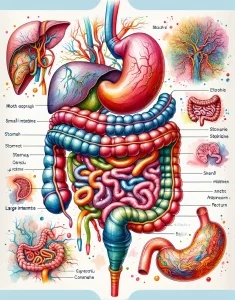
The gastrointestinal system, also known as the digestive system, is responsible for the breakdown and absorption of food in the body. It is a complex system consisting of various organs and processes that work together to ensure proper digestion and nutrient absorption. In this topic, we will explore the structure and function of the gastrointestinal system in detail.
Structure of the Gastrointestinal System
The gastrointestinal system is composed of several organs, including the mouth, esophagus, stomach, small intestine, large intestine, rectum, and anus. Each of these organs has a specific role in the digestion and absorption of food.
- Mouth: The mouth is the starting point of the digestive system. It is where food enters the body and undergoes the process of mastication or chewing. The mouth also plays a role in the formation of saliva, which contains enzymes that begin the digestion process.
- Esophagus: The esophagus is a muscular tube that connects the mouth to the stomach. Its main function is to transport food from the mouth to the stomach through a series of rhythmic contractions known as peristalsis.
- Stomach: The stomach is a sac-like organ located in the upper abdomen. It serves as a storage area for food and secretes gastric juices that aid in the digestion of proteins. The stomach also produces mucus to protect its lining from the acidic environment.
- Small Intestine: The small intestine is the longest part of the gastrointestinal tract and plays a crucial role in nutrient absorption. It is divided into three sections: the duodenum, jejunum, and ileum. The small intestine receives partially digested food from the stomach and further breaks it down using enzymes produced by the pancreas and liver.
- Large Intestine: The large intestine, also known as the colon, is responsible for absorbing water and electrolytes from the remaining undigested food. It also houses billions of bacteria that aid in the breakdown of certain substances and the production of vitamins.
- Rectum and Anus: The rectum and anus are the final parts of the gastrointestinal system. The rectum stores waste material, and the anus is the opening through which feces are eliminated from the body.
Function of the Gastrointestinal System
The gastrointestinal system performs several important functions to ensure proper digestion and absorption of nutrients. These functions include:
- Ingestion: Ingestion refers to the intake of food into the mouth. It is the first step in the digestive process.
- Digestion: Digestion is the process of breaking down food into smaller, more manageable pieces. It occurs through both mechanical and chemical processes. Mechanical digestion involves chewing and mixing food with saliva, while chemical digestion involves the action of enzymes and gastric juices.
- Absorption: Absorption is the process by which the nutrients from digested food are taken up by the body. It primarily occurs in the small intestine, where nutrients such as carbohydrates, proteins, and fats are absorbed into the bloodstream.
- Elimination: Elimination refers to the removal of waste material from the body. It involves the excretion of indigestible substances, such as fiber and undigested food, as feces.
Common Gastrointestinal Disorders
The gastrointestinal system is susceptible to various disorders that can affect its structure and function. Some common gastrointestinal disorders include:
- Gastroesophageal Reflux Disease (GERD): GERD occurs when stomach acid flows back into the esophagus, leading to symptoms such as heartburn, regurgitation, and chest pain.
- Peptic Ulcers: Peptic ulcers are open sores that develop on the lining of the stomach, esophagus, or small intestine. They are often caused by a bacterial infection or long-term use of nonsteroidal anti-inflammatory drugs (NSAIDs).
- Irritable Bowel Syndrome (IBS): IBS is a chronic disorder characterized by abdominal pain, bloating, and changes in bowel habits. It is thought to be caused by a combination of factors, including abnormal gastrointestinal motility, hypersensitivity, and psychological factors.
- Inflammatory Bowel Disease (IBD): IBD refers to a group of chronic inflammatory disorders of the gastrointestinal tract, including Crohn’s disease and ulcerative colitis. These conditions cause inflammation and damage to the lining of the digestive tract, leading to symptoms such as abdominal pain, diarrhea, and weight loss.
Conclusion
The gastrointestinal system is a crucial part of the body’s overall digestive process. Understanding its structure and function is essential for healthcare professionals, particularly nurses, when providing care and support to patients with gastrointestinal disorders. By having a comprehensive knowledge of the gastrointestinal system, nurses can effectively assess, manage, and educate patients about their condition, ultimately improving their overall health and well-being.