
-
Lesson 1: Introduction to Nursing in Zambia3 Topics
-
Lesson 2: Fundamentals of Nursing3 Topics
-
Lesson 3: Anatomy and Physiology4 Topics
-
Lesson 4: Pharmacology3 Topics
-
Lesson 5: Health Assessment3 Topics
-
Lesson 6: Community Health Nursing3 Topics
-
Lesson 7: Maternal and Child Health Nursing3 Topics
-
Lesson 8: Mental Health Nursing3 Topics
-
Lesson 9: Communication Skills3 Topics
-
Lesson 10: Medicines Delivery3 Topics




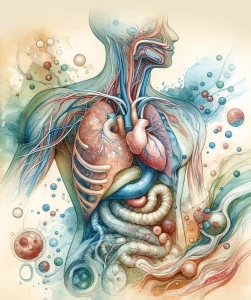
Anatomy and physiology are two closely related fields of study that focus on understanding the structure and function of the human body. In this topic, we will explore the basic concepts of anatomy and physiology and how they are interconnected.
What is Anatomy?
Anatomy is the branch of science that deals with the structure of the human body and its various parts. It involves the study of organs, tissues, cells, and the systems that make up the human body. By understanding the structure of these components, we gain insight into their functions.
What is Physiology?
Physiology, on the other hand, is the study of how the different parts of the body work together to carry out various functions. It focuses on the mechanisms and processes that enable the body to function, such as digestion, respiration, circulation, and reproduction. Physiology helps us understand how the body’s systems interact and maintain homeostasis, or a state of balance.
Relationship between Anatomy and Physiology
Anatomy and physiology are closely intertwined, as they are both essential for a comprehensive understanding of the human body. The structure of an organ determines its function, and an organ’s function is influenced by its structure. For example, the shape and composition of the heart allow it to pump blood efficiently, and its function as a pump is directly related to its structure.
By studying anatomy, we can identify the different components of the body and how they are organized. This knowledge then serves as a foundation for understanding the physiology of these structures. Understanding the structure of the heart, for instance, helps us comprehend its function in pumping blood throughout the body.
Similarly, by studying physiology, we gain insights into how the body’s systems work and how they are influenced by various factors. This information can then be applied to understand the anatomical features that enable these functions. For example, studying the physiology of respiration helps us appreciate the structure of the respiratory system, including the lungs and airways, and how they facilitate the exchange of oxygen and carbon dioxide.
Importance of Studying Anatomy and Physiology
Anatomy and physiology form the basis for many healthcare professions, including nursing. Understanding the structure and function of the human body is essential for providing effective patient care. By studying anatomy and physiology, nurses can:
- Identify and understand normal body functions, enabling them to recognize abnormal signs and symptoms.
- Make informed decisions about patient care based on a thorough understanding of anatomy and physiology.
- Communicate effectively with other healthcare professionals using the correct terminology.
- Provide accurate patient education and counseling by explaining complex medical concepts in a way that patients can understand.
In conclusion, the study of anatomy and physiology is crucial for anyone pursuing a career in healthcare, especially nursing. By comprehending the relationship between structure and function in the human body, nurses can provide effective care and contribute to the overall well-being of their patients.