
-
Lesson 1: Introduction to Nursing in Zambia3 Topics
-
Lesson 2: Fundamentals of Nursing3 Topics
-
Lesson 3: Anatomy and Physiology4 Topics
-
Lesson 4: Pharmacology3 Topics
-
Lesson 5: Health Assessment3 Topics
-
Lesson 6: Community Health Nursing3 Topics
-
Lesson 7: Maternal and Child Health Nursing3 Topics
-
Lesson 8: Mental Health Nursing3 Topics
-
Lesson 9: Communication Skills3 Topics
-
Lesson 10: Medicines Delivery3 Topics




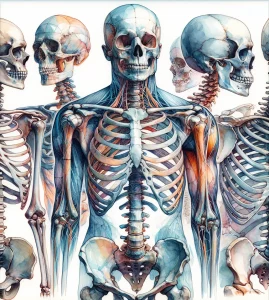
The skeletal system is a complex framework of bones, joints, and connective tissues that provide support, protection, and movement to the human body. In this topic, we will delve into the structure and function of the skeletal system, exploring the different components and their importance in maintaining overall health and well-being.
Learning Objectives
By the end of this lesson, you will be able to:
- Identify the major bones in the human body
- Understand the different types of joints and their functions
- Explain the role of connective tissues in the skeletal system
- Recognize the importance of the skeletal system for overall body function
Introduction to the Skeletal System
The skeletal system is composed of 206 individual bones, which are divided into two main categories: the axial skeleton and the appendicular skeleton. The axial skeleton includes the skull, vertebral column, and ribcage, while the appendicular skeleton consists of the bones of the upper and lower limbs, as well as the shoulder and pelvic girdles.
Bones
Bones are living tissues that are constantly changing and adapting to the body’s needs. They provide structural support, protect vital organs, and serve as attachment sites for muscles. The skeletal system also plays a crucial role in hematopoiesis, the process of blood cell formation that occurs within the bone marrow.
Joints
Joints are the points where two or more bones meet. They allow for movement and flexibility, enabling us to perform various activities such as walking, running, and bending. There are different types of joints, including hinge joints, ball-and-socket joints, and gliding joints, each with its own range of motion and stability.
Connective Tissues
Connective tissues, such as tendons and ligaments, play a vital role in the skeletal system. Tendons attach muscles to bones, allowing for movement and transmitting the force generated by the muscles. Ligaments, on the other hand, connect bones to other bones, providing stability and preventing excessive movement.
Structure and Function of Bones
Bones are composed of several layers, each serving a specific function. The outer layer, called the periosteum, provides protection and serves as a site for bone growth and repair. Beneath the periosteum is the compact bone, which is dense and strong, giving the bone its rigidity. Within the compact bone is the spongy bone, which contains bone marrow responsible for producing blood cells.
Bone Cells
There are three main types of bone cells: osteoblasts, osteocytes, and osteoclasts. Osteoblasts are responsible for bone formation, while osteocytes maintain bone tissue. Osteoclasts, on the other hand, are involved in bone resorption, the process of breaking down and recycling bone tissue.
Bone Growth and Remodeling
The growth and remodeling of bones are regulated by various factors, including hormones, physical activity, and nutrition. During childhood and adolescence, the growth plates at the ends of long bones are responsible for bone growth. As we age, bone remodeling becomes more prominent, allowing for the repair of damaged or worn-out bone tissue.
Conclusion
The skeletal system is an incredibly intricate and essential part of the human body. It provides support, protection, and movement, and plays a crucial role in various physiological processes. Understanding the structure and function of the skeletal system is fundamental for anyone studying nursing, as it forms the basis for providing optimal care for patients.
Remember to review the main learning objectives before moving on to the next topic.