
-
Lesson 1: Introduction to Nursing in Zambia3 Topics
-
Lesson 2: Fundamentals of Nursing3 Topics
-
Lesson 3: Anatomy and Physiology4 Topics
-
Lesson 4: Pharmacology3 Topics
-
Lesson 5: Health Assessment3 Topics
-
Lesson 6: Community Health Nursing3 Topics
-
Lesson 7: Maternal and Child Health Nursing3 Topics
-
Lesson 8: Mental Health Nursing3 Topics
-
Lesson 9: Communication Skills3 Topics
-
Lesson 10: Medicines Delivery3 Topics




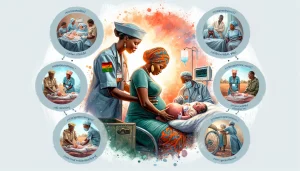
In this topic, we will explore the stages of labor and delivery, as well as the nursing care provided to women during this process. We will also discuss important aspects such as pain management and postpartum care.
Stages of Labor
Labor is the process by which a baby is born. It can be divided into three stages:
- Stage 1: Dilation and Effacement of the Cervix: This is the longest stage of labor and is further divided into three phases – early, active, and transition. During this stage, the cervix dilates and effaces (thins out) to allow the baby to pass through the birth canal.
- Stage 2: Expulsion of the Baby: This is the stage when the baby is born. The mother will experience strong contractions to push the baby through the birth canal. The healthcare provider will guide the mother during the pushing phase to ensure a safe delivery.
- Stage 3: Delivery of the Placenta: After the baby is born, the placenta (also known as the afterbirth) needs to be delivered. The healthcare provider will assess the mother for any signs of complications and ensure the complete expulsion of the placenta.
Nursing Care during Labor and Delivery
During labor and delivery, nurses play a crucial role in providing care and support to women. Here are some important aspects of nursing care during this stage:
- Monitoring the Mother and Baby: Nurses closely monitor the mother’s vital signs, fetal heart rate, and progress of labor. They also assess the mother’s pain levels and provide appropriate pain management techniques.
- Providing Emotional Support: Labor can be physically and emotionally challenging for the mother. Nurses provide emotional support by encouraging and reassuring the mother throughout the process. They also involve the birth partner or family members in the birthing experience, if desired by the mother.
- Assisting with Pain Management: Nurses employ various pain management techniques during labor, such as breathing exercises, relaxation techniques, massage, and positioning. They may also administer pain medications as prescribed by the healthcare provider.
- Monitoring and Maintaining Safety: Nurses ensure a safe environment for both the mother and baby during labor and delivery. They monitor the progress of labor, fetal heart rate, and any signs of complications. In case of emergencies, they are trained to respond quickly and provide immediate interventions.
Postpartum Care
Once the baby is born and the placenta is delivered, the mother enters the postpartum period. During this time, nurses continue to provide care and support, focusing on the following areas:
- Assessment of the Mother: Nurses assess the mother’s vital signs, uterine contraction, and vaginal bleeding to ensure that she is recovering well. They also monitor for any signs of complications, such as postpartum hemorrhage or infection.
- Breastfeeding Support: Nurses assist and educate the mother about breastfeeding techniques, positioning, and proper latch. They address any concerns or difficulties the mother may have and provide guidance for successful breastfeeding, or additional food.
- Emotional Support and Education: Nurses provide emotional support to the mother as she adjusts to the demands of motherhood. They educate her about postpartum care, including perineal care, contraception, and signs of postpartum depression.
- Newborn Care: Nurses also provide care and support for the newborn, including monitoring vital signs, assessing feeding patterns, and assisting with newborn hygiene.
Conclusion
Labor and delivery is a significant event in a woman’s life, and nurses play a vital role in providing comprehensive care and support during this process. By understanding the stages of labor, nursing care during labor and delivery, and postpartum care, nurses can ensure a safe and positive birthing experience for women in Zambia.